ServicesStorm Damage Repair
Storm Damage Repair in Bellevue, Matched to the Roof You Have
After high wind or hail, we check your roof, gutters and siding, photograph what moved or broke, and repair it with materials matched to what is already there. The aim is a fix that lets the rest of your roof serve its full life, with a free estimate first.
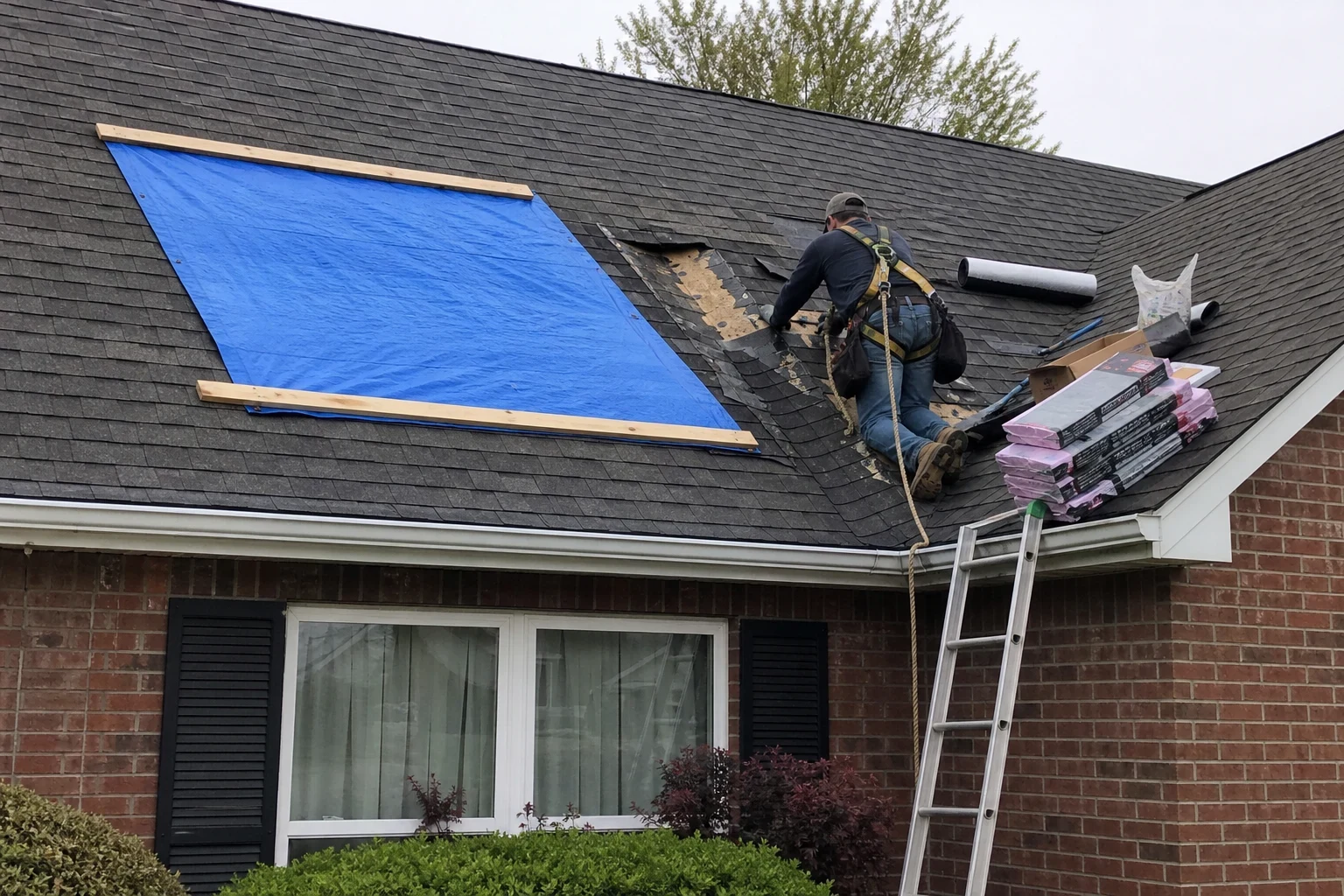
Repairing storm damage without starting over
Most storms do not ruin a roof. They lift a run of shingles, crease the tabs that stayed down, knock granules loose with hail, or bend a length of flashing at a chimney. Left alone, those small openings let water reach the decking, and what follows is usually worse than the storm itself.
Storm damage repair is about closing those openings properly. We replace what is broken, reseal what was loosened and match shingle color and profile as closely as current products allow, so the repaired area ages along with the rest of your roof instead of standing out from it.
Sometimes a storm finds a roof that was already close to retirement, or the hits cover nearly every slope. In that case a patch would only buy a short reprieve, and we tell you so. Our Roof Replacement page explains what a full tear-off involves if that proves to be the sounder choice.
What a storm repair covers
Shingles torn off or peeled back
Blown-off and ripped shingles come out, new ones go in, and we hand-seal the surrounding shingles whose adhesive strip let go. A creased shingle can look fine from the ground but no longer sheds water, so we check the tabs around every gap.
Hail bruising
Hail strips granules and can fracture the mat underneath. We mark and photograph the hits on each slope that took the weather, so you can see the pattern for yourself.
Flashing, vents and pipe boots
Chimney, wall and valley flashing gets bent or pulled back in high wind. We refasten or replace it and reseal pipe boots and vents that cracked.
Decking where water got in
If shingles were missing for any stretch of time, we check the boards or plywood below. Soft or stained sections are cut out and replaced before new shingles go on.
Gutters and siding noted in the same visit
Storms dent gutters, pull hangers loose and crack siding panels. We record that damage alongside the roof, and our gutters and siding work can be scheduled with the repair.
Signs the last storm left damage behind
- Shingle pieces in the yard
- Bits of shingle or ridge cap on the lawn mean something on the roof is now open. Even one missing tab exposes nails and underlayment to the next rain.
- A pile of granules at the downspouts
- A heavy wash of dark, sand-like grit at the downspout outlets after hail points to bruised shingles. Some shedding is normal on a new roof; a sudden pile is not.
- Dented metal
- Dings in gutters, downspouts, vent caps or window wraps show how large the hail was. If the soft metal took hits, the shingles likely did too.
- A fresh ceiling stain
- A new water mark on a ceiling or around a skylight after a windy rain means water found a path. The opening on the roof is often several feet uphill from the stain.
- Cracked or loose siding
- Wind-driven debris and hail crack panels and chip paint. Open seams let water behind the wall, where it stays out of sight.
How a storm repair visit goes
- 1
A free inspection on your schedule
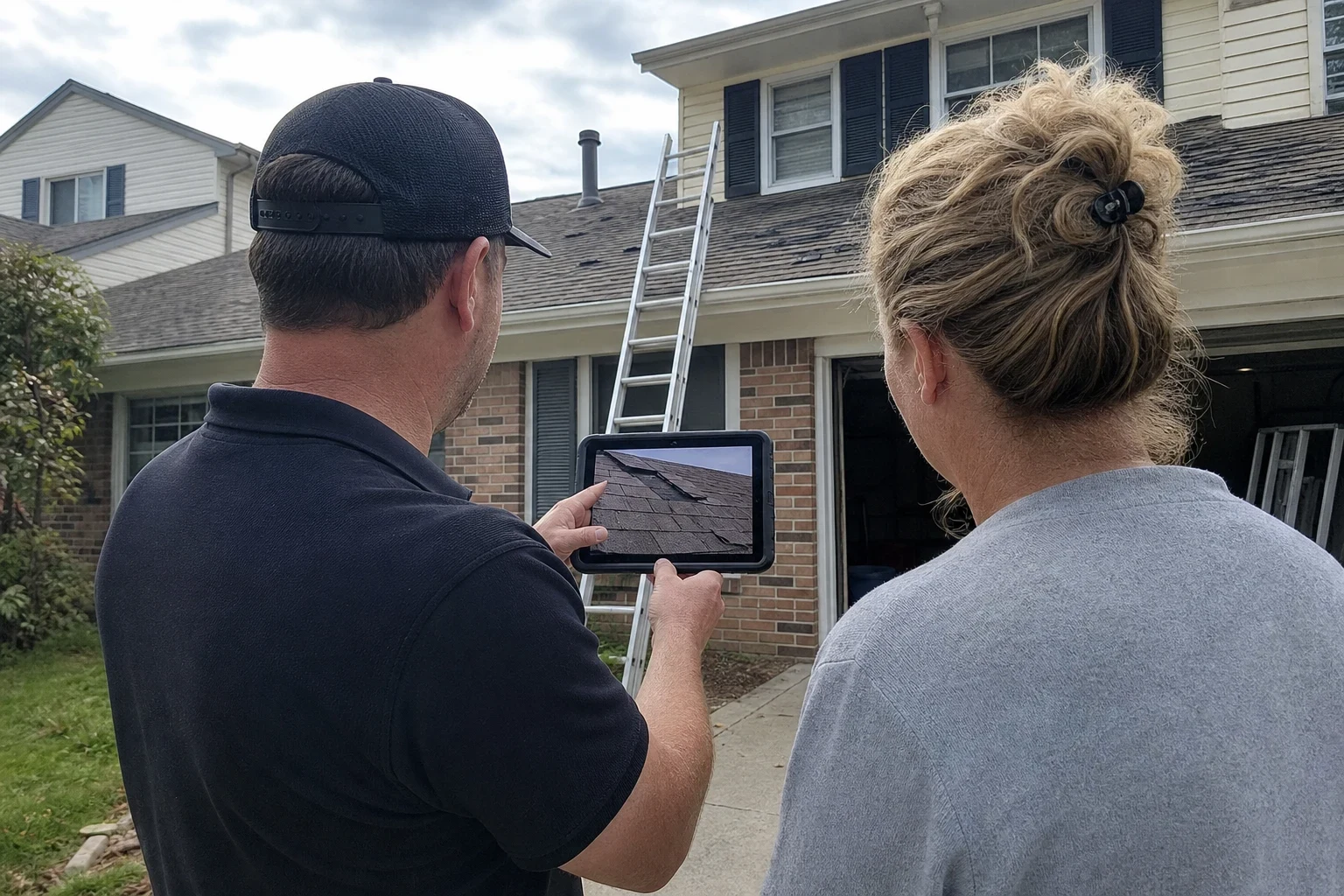
When you call, we set a time to walk the roof, gutters and siding. We look at every slope, not just the side that faced the wind.
- 2
Findings on paper, with pictures
We hand over dated pictures of each problem spot along with a line-item estimate that keeps storm damage apart from ordinary wear. That distinction matters if you decide to open an insurance claim.
- 3
Materials matched before work starts
We source shingles as close to yours in color, size and profile as we can, and we show you the match before anything goes on the roof.
- 4
Repair day
We cover plantings and protect the driveway, remove damaged material, check the decking, then install new shingles, flashing and seals. Nails and debris are picked up with a magnetic sweep before we leave.
- 5
A final walk-through
Together we look over the finished repair. If we noticed an aging pipe boot, a tired valley or another spot that may want attention in a few years, we mention it then so you can plan for it.
Why one storm repair costs more than another
No two storms strike a roof in quite the same way, so the scope of the work changes from one house to the next. After the inspection we write your estimate line by line, showing what each part of the job involves. Nothing is added later without a conversation first.
- How much of the roof was hit
- Damage confined to one corner of a single slope is modest work. When hail has marked several faces of the roof, the material list grows, along with the labor and the hours spent up top.
- How well your shingles can be matched
- Older or discontinued shingles are harder to match. Sometimes the cleanest result is redoing a full slope rather than patching the middle of it.
- The condition of the decking
- If water sat under missing shingles, some boards may need replacing. We can only confirm that once the damaged shingles come off, and we show you before we proceed.
- Chimneys, skylights and valleys
- Every roof feature adds flashing work. A roof with several of them takes more care to seal correctly than a plain gable.
- Pitch and access
- Steep slopes need extra safety setup, and tight lot lines can slow material delivery and cleanup.
Storm damage questions
- Will my insurance cover the storm repair?
- That depends on your policy and the adjuster's findings, not on us. What we provide is dated photos and an estimate that separates storm damage from age-related wear, which gives you a clear basis for talking with your insurer. We can explain the usual steps, but the coverage decision is theirs.
- Can a small bit of damage wait until spring?
- Small damage rarely stays small. Through a Northern Kentucky winter, water that slips under a lifted shingle freezes, expands and pries it further loose, then thaws and reaches the decking. If you cannot schedule a repair right away, a free inspection at least tells you what you are dealing with.
- Will the repaired area match the rest of my roof?
- Usually close, though not always perfect. Shingles fade over the years and some product lines are discontinued. We show you the closest match before work starts, and if a patch would look out of place on a front slope, we talk through redoing that full slope instead.
- Does hail mean I need a whole new roof?
- Not necessarily. Many hailstorms bruise a few slopes and leave the rest sound. We tell you which slopes need work and whether a repair will serve the roof well for its remaining years, and if replacement is the better choice we show you why in the photos.
- How can you tell storm damage from normal aging?
- Storm damage has a pattern: hits clustered on the windward side, fresh breaks with clean edges and dents in soft metal. Age-related wear is more even, with curling, cracking and granule loss across the whole roof. We point out which is which in your photos, and our Roof Inspections page covers what a routine check looks for.
Let us look at what the storm left behind
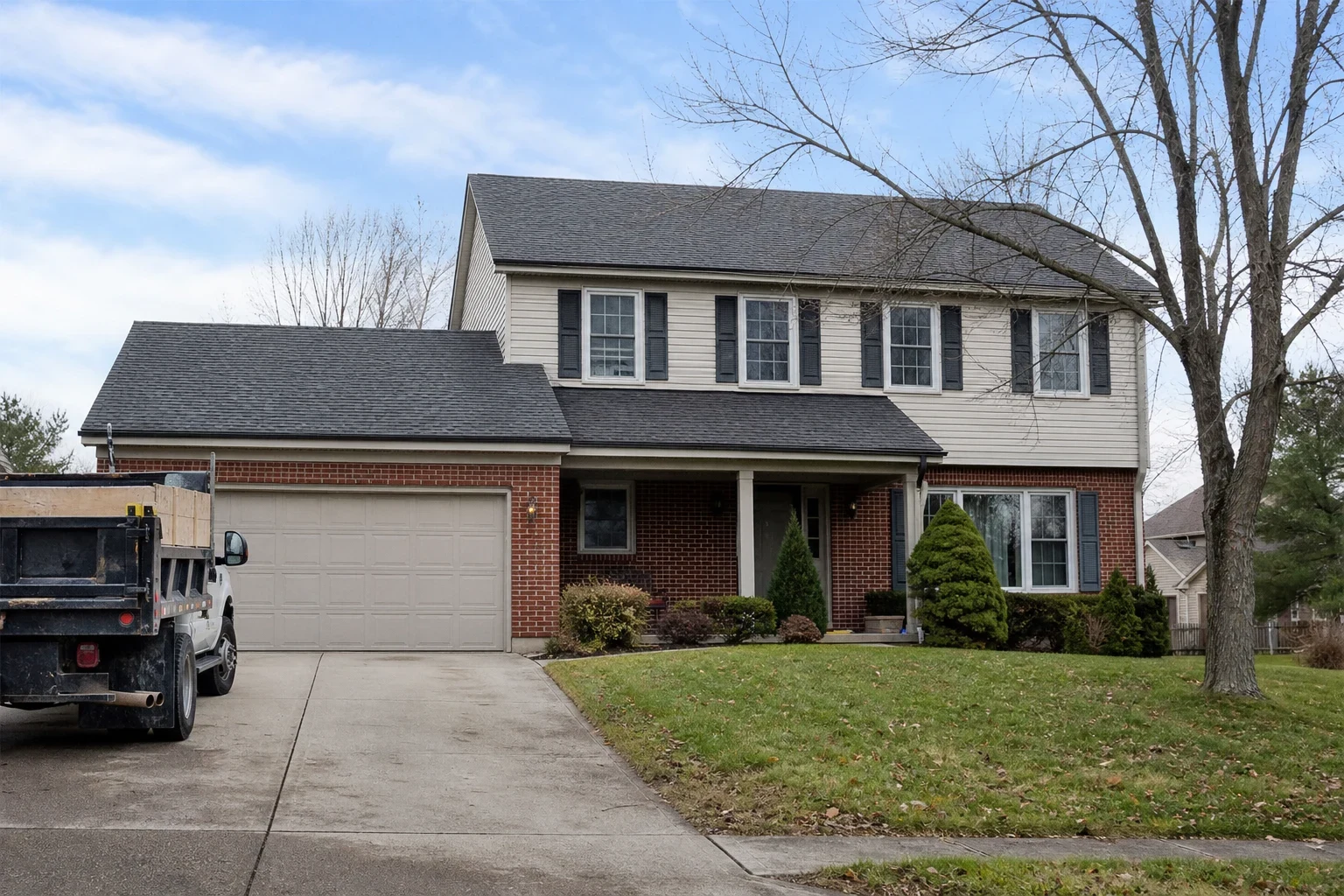
We will walk the roof, gutters and siding and give you a free estimate with photos of everything we found. New customers can ask about our Limited Time — $50 Off Your First Service Call.